It’s been a minute since my last newsletter because we’re down a comms coordinator (scroll to apply!) and I’ve also been traveling the world for our union. More on those trips at the bottom because there’s more interesting member news up top. Happy Friday! I hope you’re about to have a good restful weekend.
And, if you’re thinking, “Jon this is a lot to read!” I bolded all the important stuff! You can also just look at the pictures. Let’s dive in.
Breaking today, our members at POLITICO just got the company to shut down two AI “tools” after we won a landmark arbitration. It’s significant for journalists everywhere, but is also one of the first arbitrations involving artificial intelligence in the American labor movement.
POLITICO will shut down Capitol AI Report-Builder, a “tool” that produced branded policy reports for POLITICO Pro subscribers without any editorial review, despite generating glaring factual errors. It also will not revive the “Live Summaries” AI feature, which generated error-riddled unedited coverage of major political events, including the 2024 Democratic National Convention and Vice Presidential Debate. Both uses were found by an arbitrator in November 2025 to have violated PEN Guild’s collective bargaining agreement.
“This is an extraordinary win not just for our members, but for everyone who believes journalism must remain in human hands,” said Ariel Wittenberg, PEN Guild chair. “We refused to back down, and POLITICO heard us loud and clear that these tools do not belong in our newsroom.”
This week we lost Carol Rothman. She was a giant and her passing is a major loss for our union. Carol was elected vice president from 1983 to 1995 on the Guild’s International Executive Board, then was our sector chairperson from 1995 to 2008. She was elected secretary-treasurer from 2008 to 2013. She also served as a trustee on our union’s pension fund for many of those years up until her death Tuesday. She was an extraordinary leader who came out of The NewsGuild of Greater Philadelphia. Carol was so sweet to me, a kid from rural Arkansas by way of Los Angeles, who didn’t know much about pension funds when I was elected in 2019.
My heart goes out to Carol’s family and to all of us who knew her. For those who didn’t know her personally, know that she fought to strengthen our union during a time of great industrial and cultural change. I’ll be writing her obituary after this newsletter gets out.
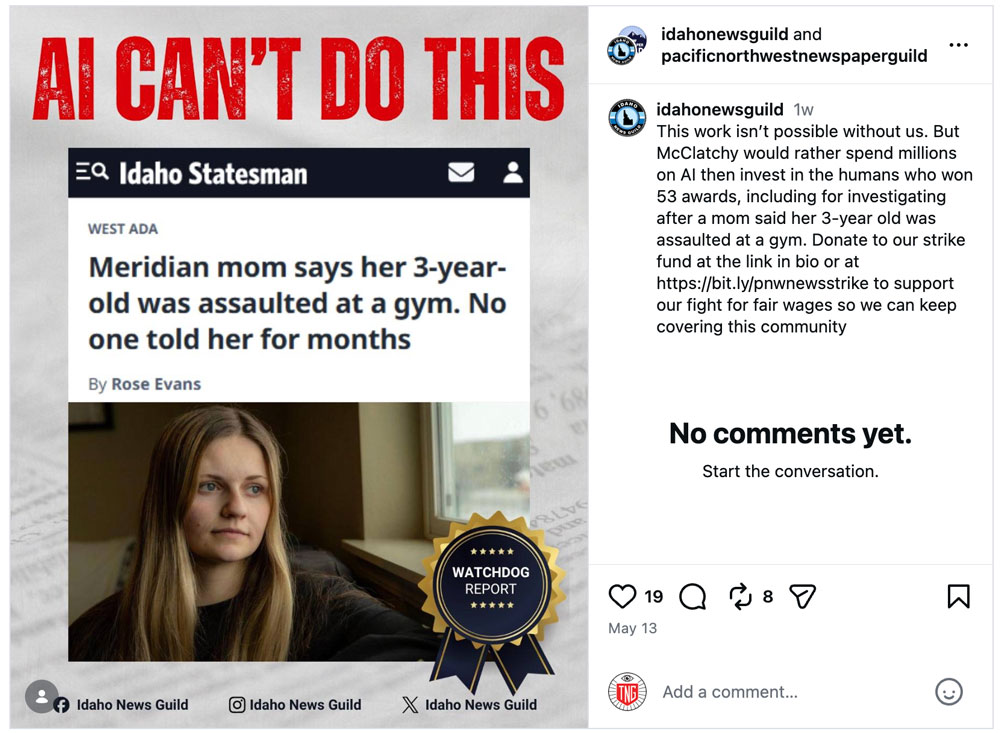
We may soon be on strike at five newspapers in the Pacific Northwest, unless McClatchy agrees to a fair contract. Journalists at McClatchy-owned newsrooms in Idaho and Washington are preparing to strike for a fair contract that includes a living wage and ethical protections from AI. After nearly a year of bargaining, McClatchy is refusing to agree to a wage floor above $52,000.
“In order to have experienced eyes and ears in your community, you need journalists who can stick around and build a life instead of bouncing from job to job,” workers wrote on their GoFundMe page.
That fundraiser is just $1,000 away from reaching a goal of $12,000.
Stand with Idaho and Washington journalists by donating here.
As part of their fight, they’re highlighting what human journalists do and building community support against AI slop and clickbait. They’ve launched a campaign called “AI can’t do this” highlighting stories that only human journalists can do.
Last week all of the journalists at the Centre Daily Times in State College, Pa. petitioned local management for voluntary recognition of their union. The effort began after McClatchy started placing journalists’ bylines on stories produced by artificial intelligence.
After two weeks of conversations every single journalist signed a union card and asked McClatchy to recognize their union with The NewsGuild of Greater Philadelphia. The company agreed to a third-party review of those cards.
“A union is a way to say what we want and to put it in a contract,” said reporter Josh Moyer. “We’re doing this to better our newsroom, which is better for the community we cover. A healthier newspaper leads to a healthier community.”
I was in State College last week and interviewed two of the journalists who led the effort. I’m excited for them to be part of our union!
And because we’re talking about McClatchy and AI, they continue to roll out this “tool” that rewrites stories, introduces errors and slaps a real human byline on articles. Now there’s a byline strike in several newsrooms.
“We don’t want to put our bylines on stories we did not actually write even if they’re based on our work,” Ariane Lange told The New York Times. Lange is an investigative reporter at The Sacramento Bee and a leader in our union there. “That in itself feels like a lie.”
Unsurprisingly, McClatchy didn’t respond to the Times’ request for comment.
Post Media, the large Canadian news chain, is owned by the same U.S.-based hedge fund Chatham Asset Management as McClatchy in the states.
McClatchy claims their AI “tool” does not invent facts, however, that’s a ~cough~ lie. An AI-generated article about former California gubernatorial candidate Eric Swalwell incorrectly conflated the experiences of different women who had accused Swalwell of harming them. According to an article in the Columbia Journalism Review, the introduction of the new AI system created a new layer of work, requiring McClatchy writers to scrutinize their rewritten articles to catch errors introduced by McClatchy’s word calculator.
Many high-profile journalists, such as Miami Herald Investigative Reporter Julie K. Brown, have refused to allow McClatchy to put their name on posts summarized using AI. Brown was recognized by The Pulitzer Prizes this year for her groundbreaking reporting that exposed Jeffrey Epstein’s systematic abuse of young women.
Workers at The Seattle Times proposed commonsense AI guardrails, including no staff reductions, transparency for readers and the right to choose when and how AI is implemented. Management’s response? They struck out everything. They’ve joined the News Not Slop campaign and are pushing for ethical AI guardrails to protect the integrity of The Seattle Times.
Could you be the Guild’s next comms coordinator? We have an opening for a recently-created job in the Guild to amplify the fights and wins across our 27,000-member union. We need someone who’s an excellent writer, social media poster and able to uplift all the amazing communications created by our members. You’ll also get to help me get this newsletter out every couple of weeks! (exciting, I know!) The job is Washington, D.C.-based and pays between $80,312 – $134,652 a year. The deadline to apply is Sunday. More info and an application here.
Our Denver local is hiring a local organizer to help even more workers join the self-named “flyover union”. Their spooky eyeball, buffalo logo is something else. The right kind of energy. They’re looking for an organizer to support workers through the entire process. Pay is $72,000 a year and includes good benefits. More info and application here.
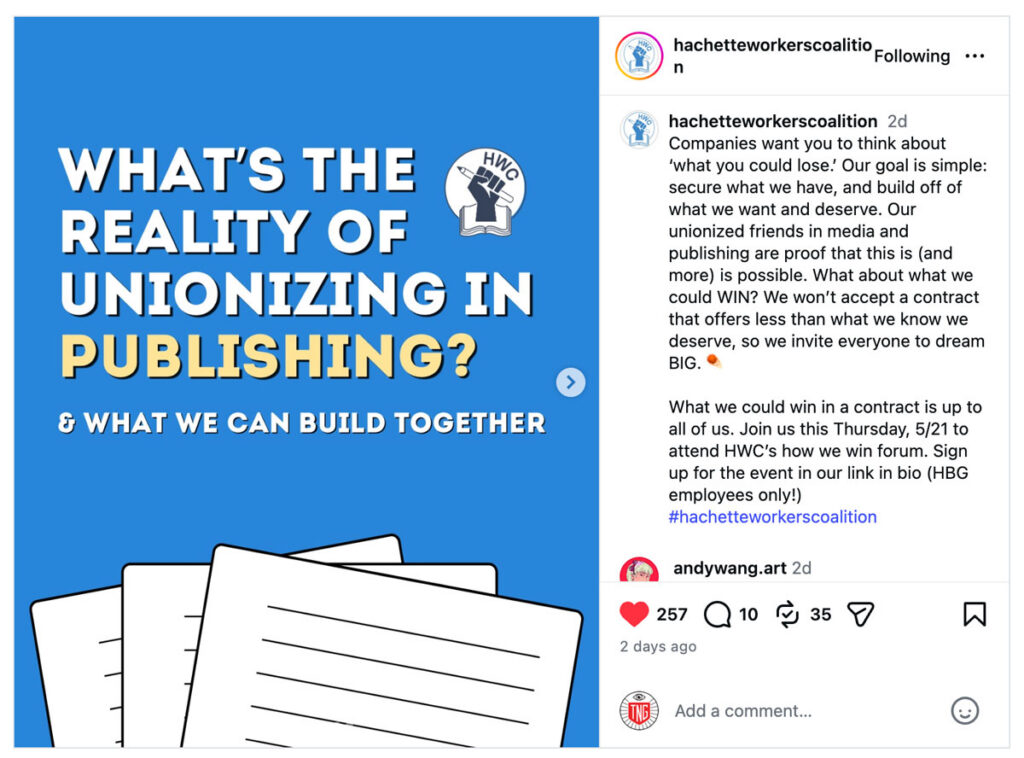
More than 700 publishing workers are campaigning to unionize with us, going public in the past several weeks. Workers at Hachette Book Group and the University of Chicago Press are organizing with the Washington-Baltimore News Guild and the Chicago News Guild, respectively. Their efforts follow successful union drives at Oxford University Press, Duke University and Verso Books in the last several years.
Hundreds of workers at Hachette launched their public union campaign at the end of April. This will become the largest union in trade publisher history and workers are demanding a living wage, better working conditions, a cap on workload hours, a clear and neutral grievance process, AI protections, follow-through on DEI policies, and more.
“As united members of the Hachette Workers Coalition, we reject our current industry model, which actively undermines the long-term development of employees’ skills and their ability to support themselves and their families in pursuit of unsustainable profit-driven growth,” said designer Andy Wang.
These workers are very active on social media (find all their links here)
Since going public, the publisher hired a union-busting firm and is likely paying them $525 an hour. Workers are undeterred with one editorial assistant saying, “I want a union at HBG because I want my voice—and the voices of my coworkers to be heard…I want a union because together we are too loud to ignore.”
More than 100 workers are unionizing at the University of Chicago Press, joining the larger union movement in publishing. They’re organizing with the Chicago News Guild and fighting for pay equity, sustainability, transparency and more.
Also super active on social media, these “Bound together” folks will vote soon and have their votes counted on July 8.
“It wasn’t a surprise when I entered academic publishing that I’d want to hold on to the various side jobs I enjoyed,” said editorial associate Matt Lang. “What did surprise me was the necessity of additional sources of income to subsidize low press pay. Learning from many of my talented peers that I’m not alone was a major factor in my decision to join the organizing effort.”
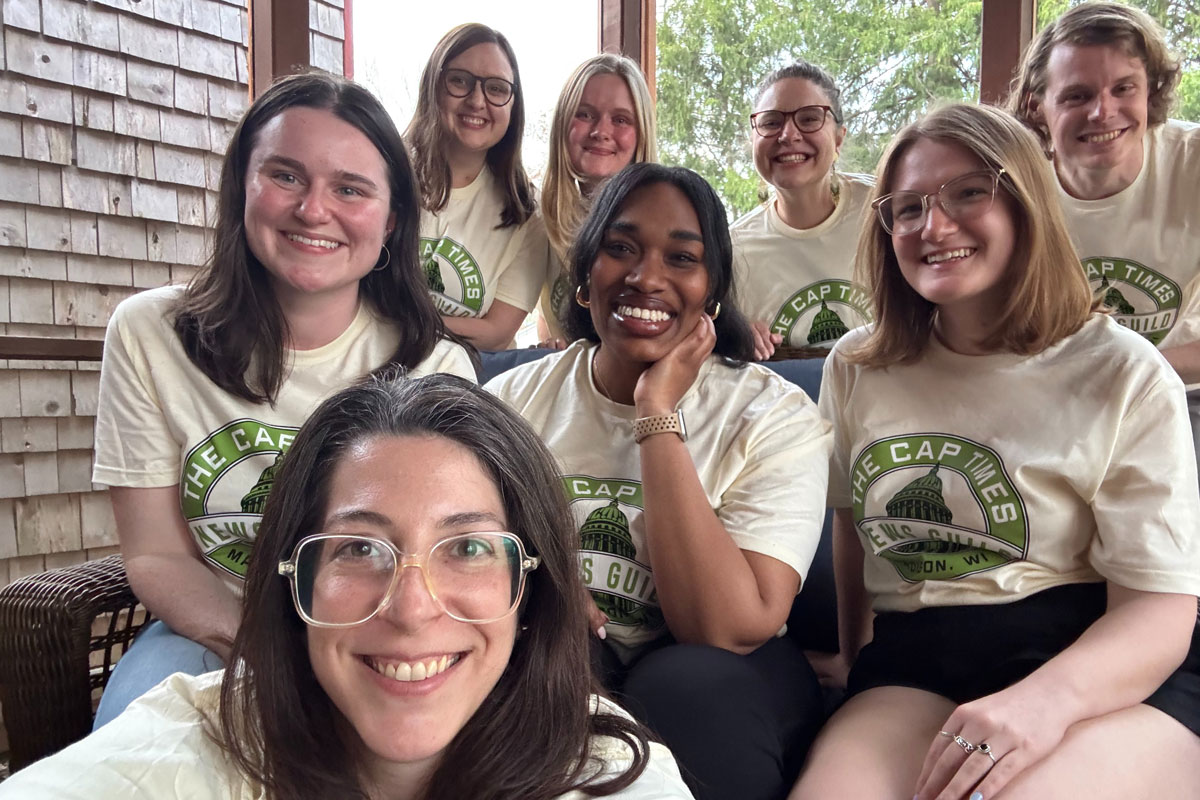
About a dozen journalists at The Cap Times in Madison, Wisc. launched their union and then were voluntarily recognized a week later. It wasn’t a difficult choice for management because every eligible staffer signed a union card. They’re joining the growing Milwaukee Newspaper Guild, which supported journalists organizing at Wisconsin Watch last year.
“As a Madisonian and the only Black reporter in the newsroom, I have a lot of respect for the Cap Times newspaper, and I value the chance to do quality community journalism,” said Cap Times Local Government Reporter Enjoyiana Nururdin. “Unionizing empowers us as a newsroom to ensure we are employing the best journalism practices for our community and beyond. This is an opportunity to strengthen our press corps.”
WildEarth workers ratified their first collective bargaining agreement after unionizing about two-and-a-half years ago. The new contract includes pay increases, cost-of-living raises, more paid time off, flexible work arrangements, just cause protections and more.
“We are immensely proud of our bargaining team and all the great provisions our first CBA includes. We are now entering a new era at WildEarth Guardians with enthusiasm and renewed drive to accomplish our critical work,” said Adam Rissien, spokesperson for WildEarth Workers. “The CBA lays a foundation for a resilient workplace prepared to fight for the wild places, wildlife, and health of the American West while ensuring the safety, security, and longevity of our workforce.”
Journalists at the largest nonprofit newsroom in Texas also just ratified their first collective agreement after two years of negotiations. Who’s that? Texas Tribune workers! They won across-the-board raises, new salary minimums, a new sick leave policy and AI guardrails.
“We entered negotiations two years ago as our newsroom and the media industry faced financial challenges and economic uncertainty,” Alejandro Serrano, the chair of the Texas Tribune Guild said. “But thanks to our strength as an engaged and united Guild and with support from the Media Guild of the West, we secured many wins in this contract that will ensure The Texas Tribune continues to be a great workplace.”
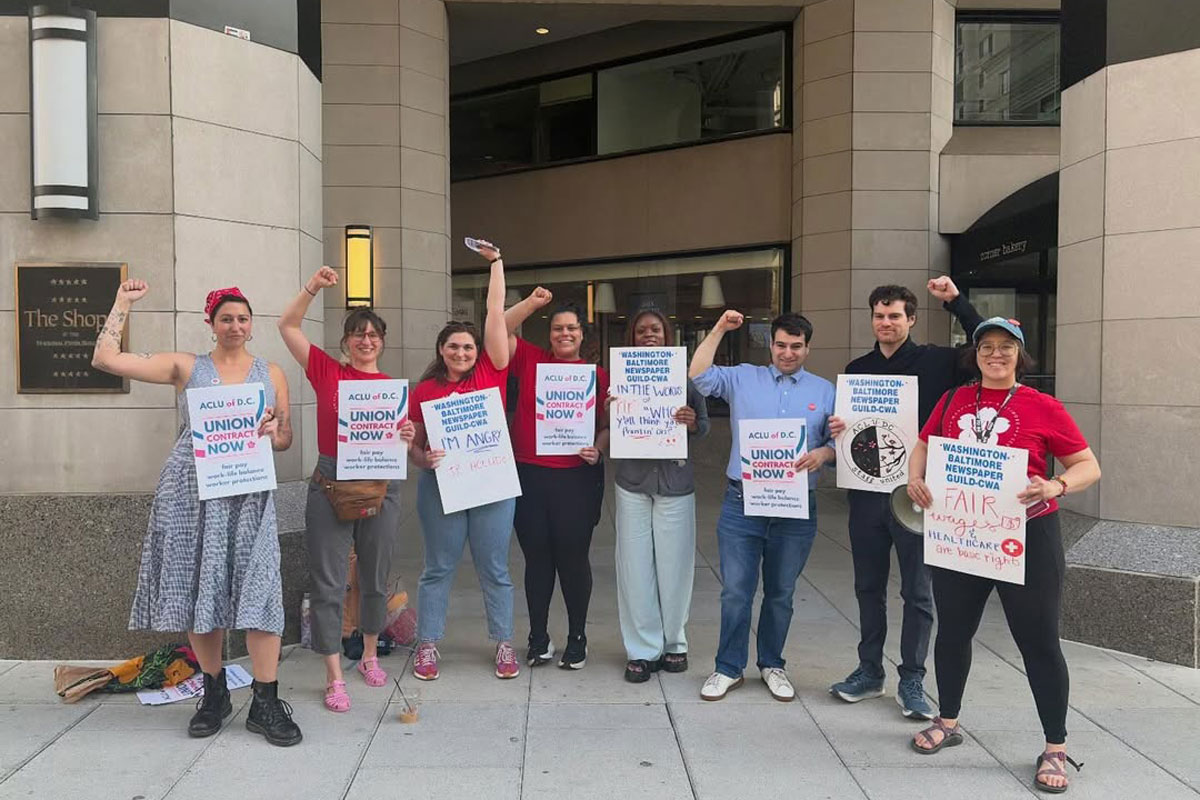
Workers at the ACLU of Washington, D.C. also just ratified their first collective agreement after quite a fight. Workers won an average 11.5% raise, a whopping $4,000 ratification bonus, a minimum salary of $72,000 and a lot more. With those numbers is there any surprise that 100% of our members voted yes?
“We spent nearly three years at the bargaining table fighting for a contract that reflects the value of the work we do every day to protect civil liberties in the District,” said Yvonne Slosarski, bargaining committee chair. “This agreement delivers for every member of our unit, and it sets a new standard for what nonprofit workers can and should win.”
Three newsrooms just slapped Hearst with labor charges over the company’s violations of federal law. Dallas, Austin and Albany filed unfair labor practice charges against the company for illegally withholding information, refusing to bargain in good faith and retaliating against employees for exercising their rights to organize. Hearst workers power exceptional journalism and it does not make sense to me why the company is fighting so hard.
The Guardian picked up the story today and got a statement by company spokespeople alleging that journalists are lying about Hearst’s behavior.
“Hearst newspaper management – in Albany, Connecticut, Austin and Dallas – is doing its best to destroy unions at its papers,” said Albany Newspaper Guild President Wendy Liberatore.
You might remember I wrote about Hearst’s stalling tactics in Connecticut, their blowing up of the contract in Austin and the offshoring of jobs in Dallas. Now our members across Hearst are working together and demanding respect as one.
Hearst bosses, if you’re reading this, just know we hold law-breakers to account over here at the lil ole NewsGuild. We will do whatever it takes to hold power to account, including and especially the boss.
ProPublica members flyered a panel in Brooklyn to make sure management knows “we are not shutting up about a fair contract!” They’ve been fighting for just cause protections and ethical AI guardrails. So far, very bizarrely, ProPublica management has refused. Workers took their struggle to the nonprofit newsroom’s board. After our one-day walkout in April, Board Chairman Paul Sagan said management has “the Board’s full and undivided support.” Ew, ew, ew, David!
Does that include Jonathan Klein of Getty Images and Henry Louis Gates, Jr. of Harvard and PBS’ Finding Your Roots? The situation is soon becoming destabilizing for the investigative newsroom. Journalists are asking for respect and ethical treatment of their work. ProPublica’s reputation is at stake if management refuses commonsense protections to support quality journalism.
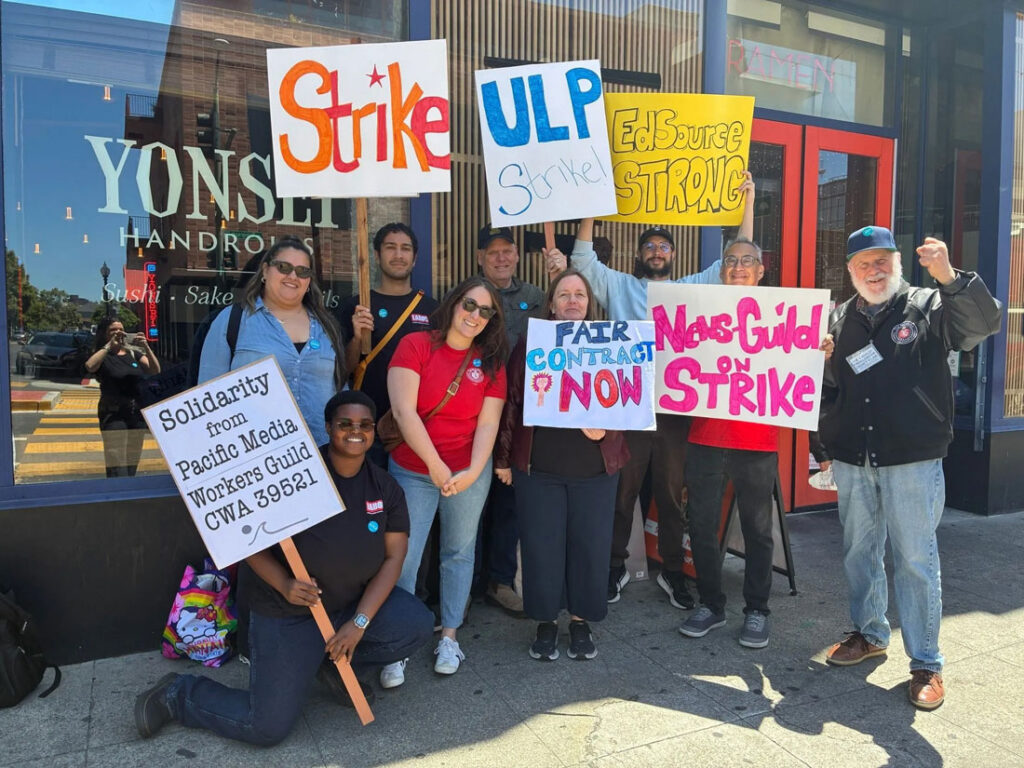
EdSource’s journalists went on a one-day strike, the first at the Pacific Media Workers Guild since 1994. It was in response to management’s unilateral changes to health benefits and a refusal to negotiate. To everyone who supported them, they want to share a big thank you! Dozens of union supporters joined our members in front of the EdSource office in Oakland and on Zoom. Supporters donated over $3,600 for their strike fund, more than 160 people signed their pledge not to cross the digital picket line.
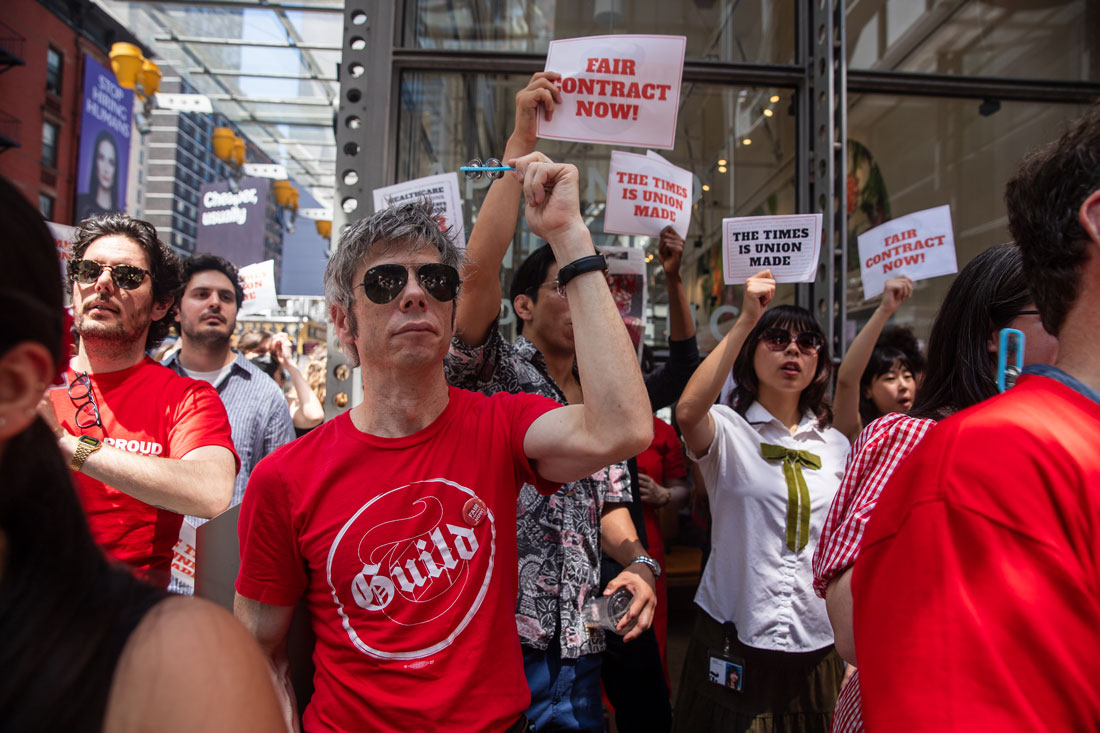
New York Times Guild members can work productively from anywhere and don’t need management’s draconian return to office mandate. They followed their social media posts with a massive in-person rally in front of the Grey Lady this, demanding a fair contract now.
Financial Times workers across the globe are standing together after management’s bad behavior in the United States and the United Kingdom. Our News Media Guild local joined with the National Union of Journalists releasing a statement calling for the company to bargain in good faith, stop the anti-union tactics and follow its own corporate human rights policy.
Where in the world is Jonny San Diego? Since our last newsletter I attended the CWA Canada National Representative Council meeting. Locals across Canada shared updates on new collective agreements and organizing of video game workers. It was a good chance to build solidarity and understand that we’re really fighting the same fights (usually in newsrooms owned by the same hedge funds!).
From there I presented at Brown University during a daylong conference on AI Governance in Newsrooms. I gave a keynote address lifting up our fights at McClatchy, ProPublica and The New York Times for ethical guardrails on artificial intelligence. What did I talk about? See the slides here.
And then I went to Paris for about a week for the International Federation of Journalists World Congress. About 280 delegates from almost 100 countries were present and representing journalists. NewsGuild of New York President Susan DeCarava joined me and we shared our wins on AI and organizing success. More than 50 motions were introduced and passed during the Congress.
I also ran for and won a spot on the 16-person Executive Committee to represent journalists in North America. Right now we should be engaging with struggling journalists across the globe and we need to build bridges with other trade unionists around the world.
From there I went to Detroit and officiated the most labor union wedding I’ve ever been to. I got to marry two of my good friends. Diana, who’s a Guild member working at the UAW, and Julian, a CWA organizer. The wedding took place in Dearborn, which has a rich immigrant and labor history. Congratulations to Diana and Julian!
Ok, that’s 2,800 words! Have a good weekend, fam!
In solidarity,
Jon