Since Labor Day I’ve been spending a lot of nights reading through our union’s history with our union’s current fights in my mind. In the pages of The Guild Reporter, I’ve been reading about a remarkable woman who was one of the Guild’s first strikers, a local president, then an international vice president. She was fired for her union activity and fought for years to be reinstated. Eighty-five years later, she offers us some sage advice.
The American Newspaper Guild’s first major strike began one year after it was founded.
It started at dawn on Saturday, November 17, 1934 when 42 members at the Newark Ledger walked out.
One of those strikers was Agnes Fahy.
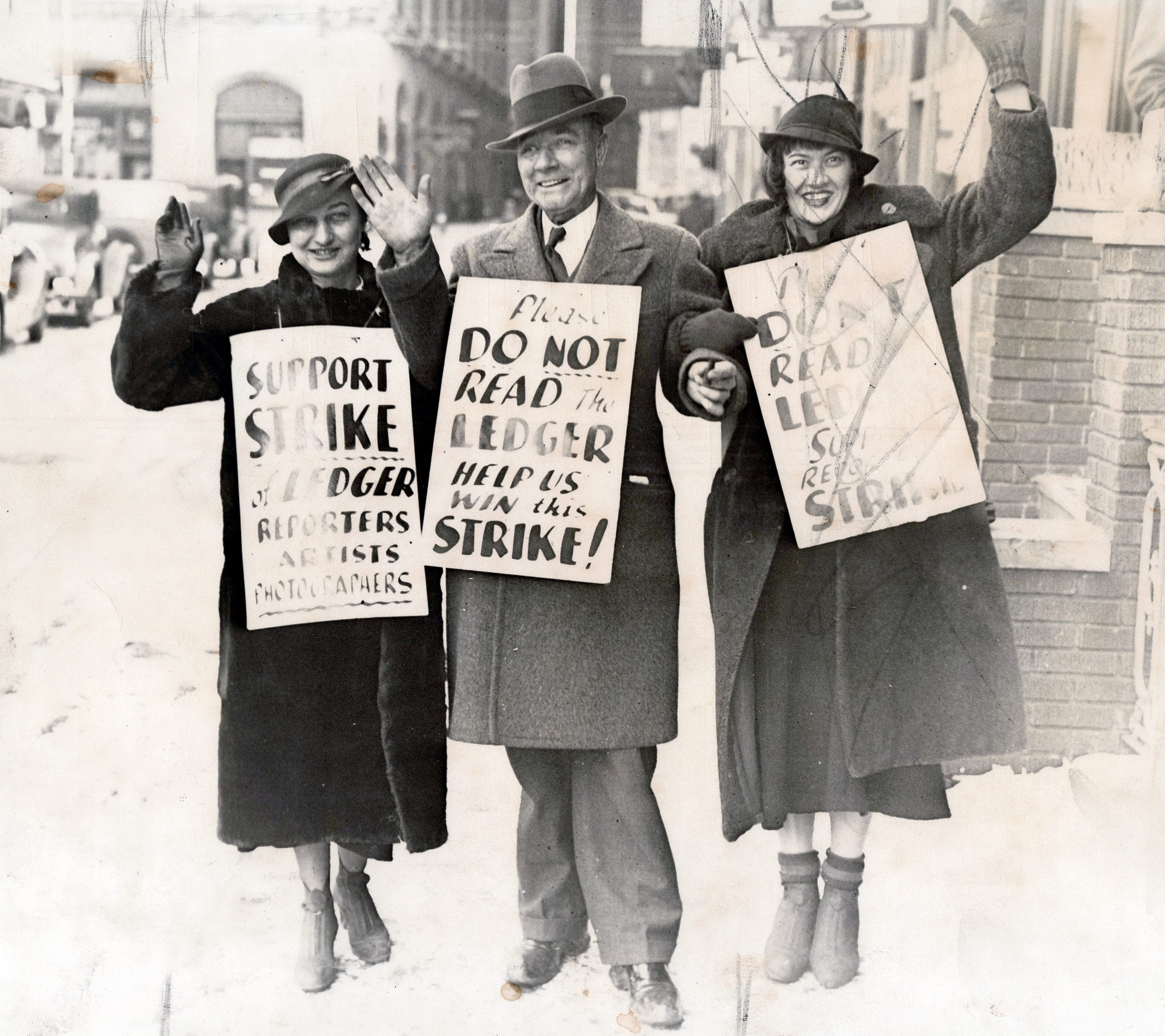
Fahy joined her coworkers in a 133-day strike after the publisher fired several coworkers and refused to negotiate with the young Guild.
Workers struck through the winter and settled in late March, winning their strike and sending the cases of their fired coworkers to arbitration. They won their jobs back too a few months later.
Fahy was 29 years old when she joined the strike. She covered church affairs and women’s political activities. She was also a general assignment reporter.
After the strike she ran for local union office, becoming a vice president and attending the Guild’s early conventions in Cleveland, St. Louis, Toronto and Memphis. She then was elected as the local’s secretary-treasurer.
In 1935, the Newark Ledger was bought by Samuel Irving Newhouse Sr. who would later found Advance Publications and purchase Condé Nast.
Newhouse had an early strategy to fight the Guild by pushing workers to sign individual contracts. The National Labor Relations Board later wrote that it thought individual contrasts were “designed to weaken unionization among these employees, to undermine the authority of the Guild Local…”
Fahy was never offered an individual contract, because, the Board assumed, she would inevitably reject one.
Shortly after Fahy became the local’s secretary-treasurer, she asked for a raise. The managing editor agreed to give her one if she signed a letter stating that she “would do no more bargaining for a year.” Fahy refused.
In August 1937 she was elected local president and oversaw the first contract ever signed at the Ledger.
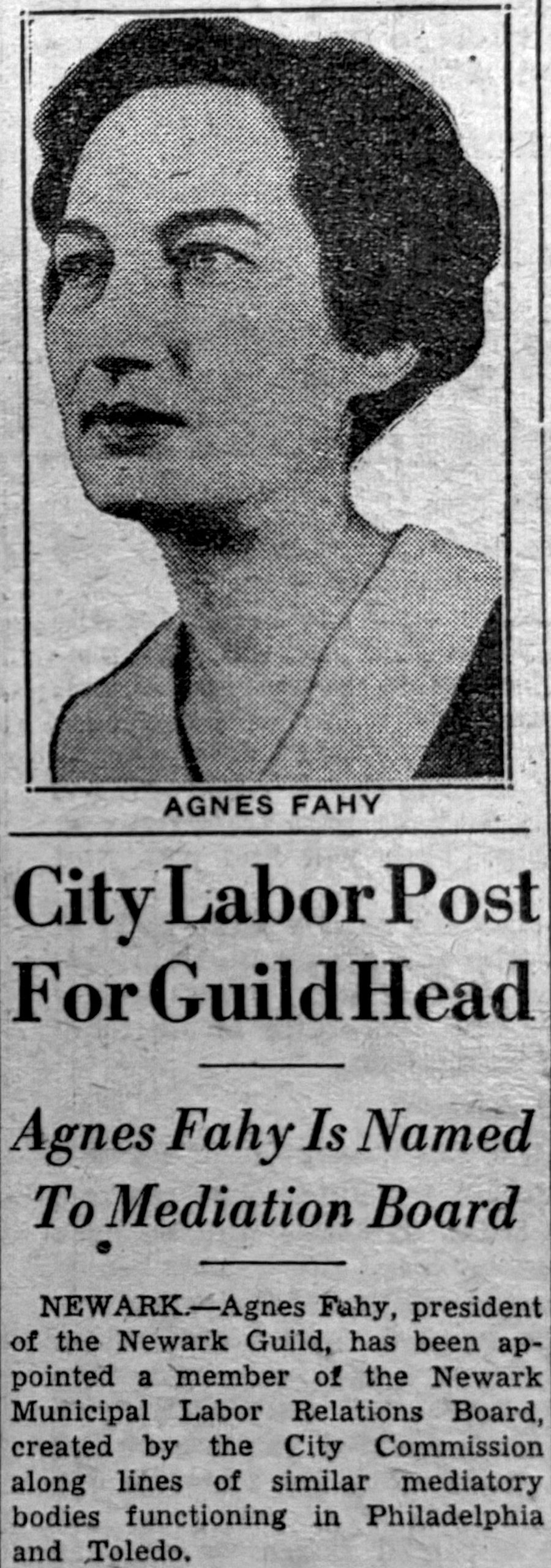
The next month Fahy was appointed to the Newark Municipal Labor Relations Board, which was a mediation body to handle disputes between workers and bosses in the city.
Throughout this, management messed with her.
First, they shifted her schedule from day to night. She asked for time off at her own expense to attend a Guild meeting and was told that management expected she would resign.
Two days after that conversation the editor fired her.
He was vague and evasive and eventually told her that the recently adopted five-day workweek in the recently-won contract “made ‘adjustments’ necessary.”
She filed an unfair labor practice charge against the Newark Ledger one month after her termination, arguing that she was illegally terminated for her Guild activity.
The charge was filed under the recently established NLRB. In 1935 Congress passed the Wagner Act, now called the National Labor Relations Act. It guarantees the right of private sector employees to organize into unions, engage in collective bargaining and take collective actions. It also prevents companies from retaliating against workers for their union support.
After Fahy’s dismissal, local unions and the Guild demanded her reinstatement with several local unions boycotting the paper until she was reinstated.
Newhouse refused to reinstate her.
A hearing was scheduled in September 1938, almost a year after Fahy was terminated. Management’s witness didn’t help Newhouse. The editor told an NLRB examiner that Fahy was “a competent newspaper woman” and that her copy was of “an intelligent, capable writer.”
Hearings continued over five weeks and, even after that time, the trial examiner hadn’t been able to obtain from management a specific reason for Fahy’s discharge.
The paper, meanwhile, complained about their treatment by the NLRB and charged the general counsel as biased. The general counsel happened to be Fahy’s brother Charles.
By November 1938 the NLRB’s trial examiner ruled in her favor and recommended she be reinstated with full back pay. He said Fahy had been fired for Guild activity.
Newhouse refused to reinstate her and appealed to the full National Labor Relations Board.
And almost two years later, the board reaffirmed the examiner’s decision, ordering Fahy’s reinstatement and that she be paid approximately $6,500 in back pay.
The Board wrote that Fahy “consistently adhered to a militant trade-union point of view.” Management “took active steps against the single employee who, probably more than any other of its editorial employees, had steadfastly sought throughout 1936 and in 1937 to strengthen the union as an effective instrument for advancing the employees’ economic interests.”
Newhouse appealed the Board’s decision, requiring action by the U.S. Circuit Court of Appeals.
In the meantime Fahy was elected as an at-large international vice president of the Guild in July 1940.
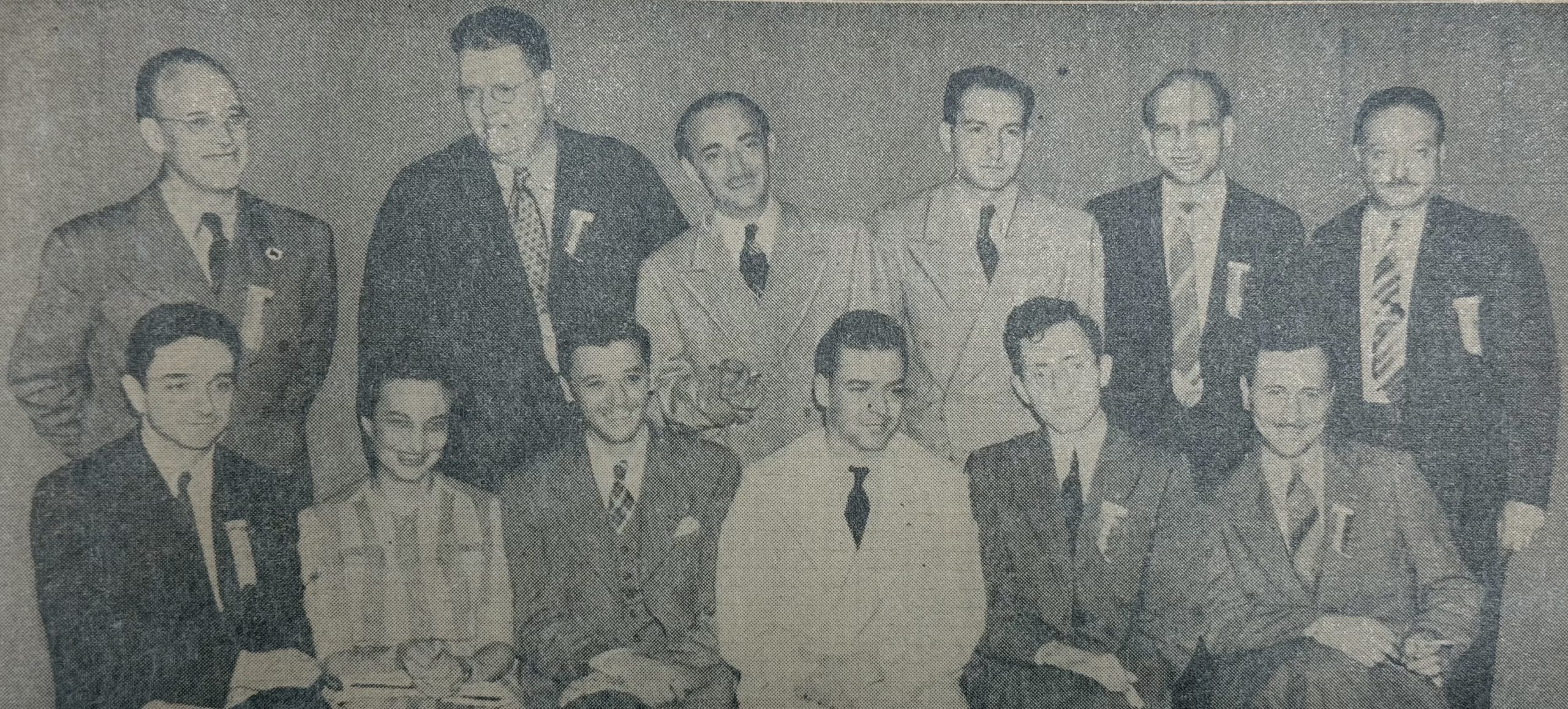
The appeal of the Board’s decision landed in Philadelphia by 1941. Initially the court ruled against Fahy. The Guild Reporter wrote that the court’s ruling “would annul approximately 50 per cent of the Wagner Act.”
But four days later the court stayed its own ruling without explanation and ordered the case opened and reargued.
At the same time, Fahy was helping the Guild negotiate its first contract in Georgia at the Macon Telegraph Publishing Co.
The Reporter wrote that Fahy carried the load for the local. “Miss Fahy’s powers of persuasion, knowledge of Guild affairs, and persistence were joined with the weight of a pending labor board charge to convince management that the Guild meant business.”
Coming off that win she was back in Philadelphia as her case was reargued before five judges.
Two months later the court reversed its earlier decision and ordered that Fahy be reinstated and given backpay. Judges wrote that their earlier decision had placed “too narrow a construction” upon the powers of the NLRB.
Fahy continued to build the Guild and was chairman of the Guild Convention’s organization committee in 1941. Her committee argued for an expansion of the Guild’s resident organizing program, which placed paid organizers in cities with financial backing from the Congress of Industrial Organizations. The program helped increase the Guild’s dues-paying membership by almost 15%. Fahy’s report was unanimously adopted by delegates.
After the Guild’s convention, Newhouse appealed one last time, now to the U.S. Supreme Court. Newhouse’s lawyers argued that the NLRB had no role in overseeing discriminatory dismissals after a contract had been signed.
Finally by December of 1941, Fahy and the Guild had heard back from the Supreme Court.
It refused to entertain management’s appeal, thus ordering her reinstatement and backpay. The Circuit Court ordered the company to comply by March 20, 1942.
On that day, Fahy found a check in her mailbox for $9,865.50.
That’s $231,101.06 in 2026 dollars.
She quickly sent a check to her local for back dues. She had been mostly unemployed during the four-and-a-half years after she was fired.
In an interview with The Guild Reporter, she highlighted the challenges of relying on legal action instead of militant collective action.
“While I am gratified at the outcome of this case, it is obvious that Labor Board action is not an effective substitute for strong unit action in discriminatory dismissals,” she said.
“Although I am reinstated, the publisher has been able to continue his terroristic tactics with the unit in the intervening four and a half years.
“The case does demonstrate, however, that the Guild is a relentless fighter on behalf of its members.”
She got her job back and a massive quarter-million dollar settlement.
She was under constant pressure from managers and was dismissed again three months later.
The Guild took the case back to the NLRB, which held several conferences between an NLRB attorney and the paper’s managing editor. The company agreed to a settlement rather than be forced back into court.
Fahy was offered reinstatement with back pay for the second time in a year. She accepted and resigned immediately, taking a $1,100 severance ($24,083.53 in 2026 dollars).
Shortly after her second dismissal she got a job at the American Lung Association in New York as a science writer. She stayed there until her retirement in 1970.
Fahy died at age 81 in 1986. Her obituary said, “at the Ledger she became active in the rights of the laborers in the press department.”
What an understatement.
Agnes Fahy led the guild through its first major strike, won several first contracts and advocated for industrial organizing through militant collective action.
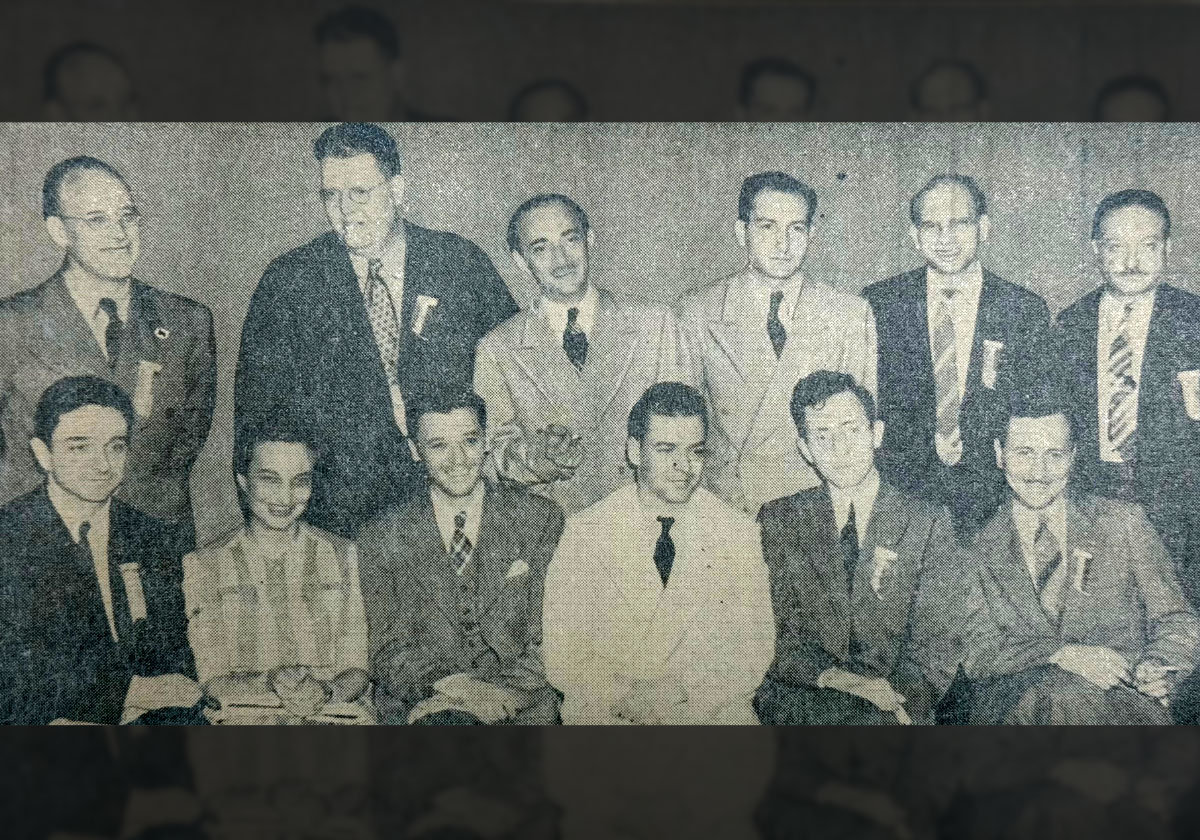
A few dozen members chartered the Newark local in December 1933 and helped build the union now called The NewsGuild-CWA.
Agnes Fahy was one of them.